Biology Projects

Three kinds of biology work live here: a PCR classroom experiment with a complete written record, three research papers, and an interactive web lab that turns Agrobacterium transformation into a drag-and-drop exercise. They run experiment → papers → interactive, and each one opens its source document.

PCR Laboratory

Pioneering the first PCR experiment in high school, bringing advanced biology experiments into the classroom.
Exploring optimal reagent dosages for classroom experiments through pre-experiments and template quantity experiments.

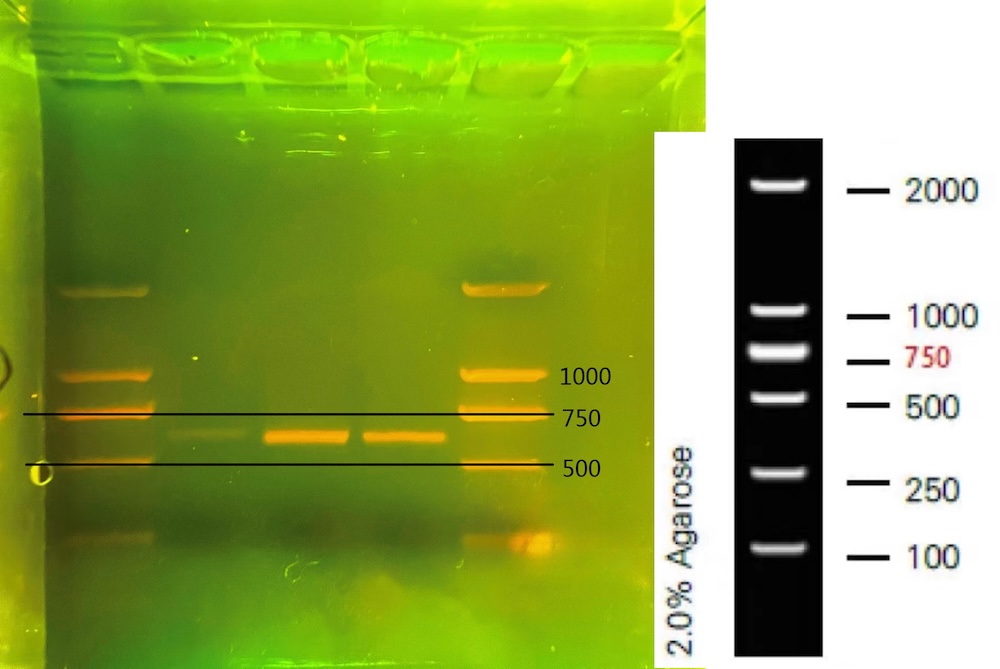
PCR gel electrophoresis results
Gel electrophoresis shows clear bands, confirming successful target gene amplification.
Compared with the standard marker, the length is approximately 600bp, matching experimental expectations.

Experimental Design

Detailed PCR experimental design including primer design, thermal cycling parameters, and reaction system optimization. Practical for high school biology classrooms, providing reference for future experiments.

Final Lab Report

Complete experimental records, data analysis, and conclusions validating the effectiveness of the experimental design.

Thesis Archive

Records of research and reflection, including completed papers and works in progress.

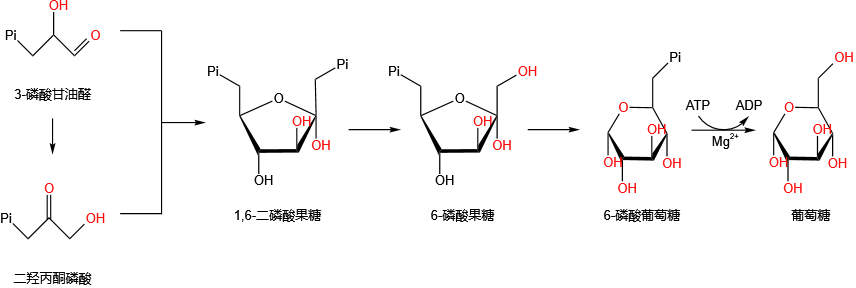
C3 plant photosynthesis paper
Draft 2024.6.8

Molecular Biology Research on the Calvin Cycle in C3 Plants

Walks through the Calvin cycle, the core carbon-fixation pathway, from a molecular-biology angle: the reaction sequence is broken down step by step, key reactions are shown as molecular structures, and the route to sugar is analysed.

Question
How does each step of the Calvin cycle actually work, and where does the sugar come from?
Method
Literature review plus molecular structure diagrams. Reconstructs carbon assimilation in reaction order, draws the structural changes at each key step, then analyses how sugar is formed.
Output
Turns a complex assimilation pathway into a clear, referenceable sequence for later molecular-biology work. The manuscript is still being revised.
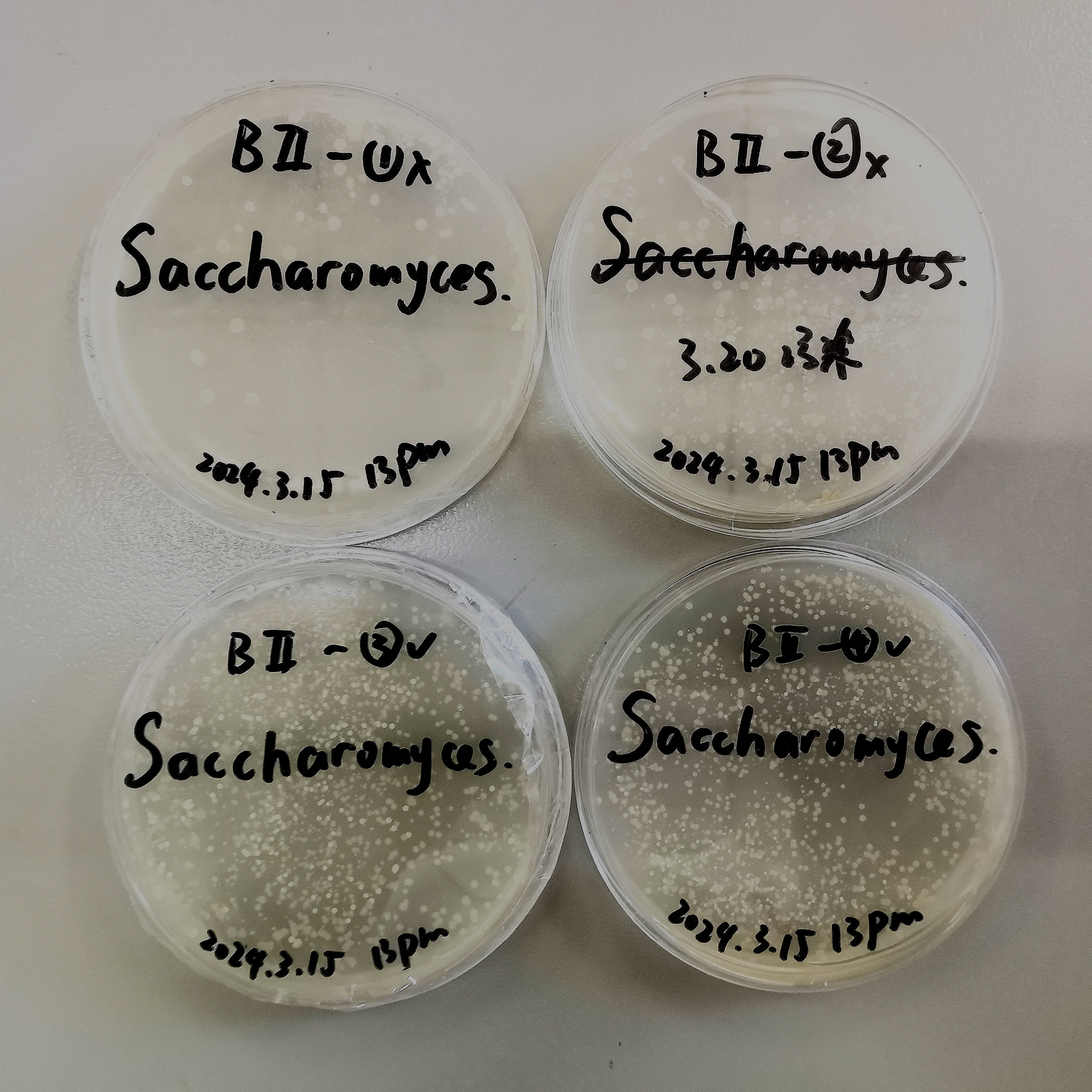
Saccharomyces cerevisiae orange plate experiment paper
Draft 2026.03.08

Analysis and Verification of Orange Plate Discoloration in Yeast Experiments

Investigates why culture plates occasionally turn orange during yeast cultivation, ruling out colour sources one by one through controlled-variable experiments, and uses the case to set out an approach to error analysis and lab quality control.

Observation
In a class experiment the yeast first grew normal milky-white colonies. Some time later the colonies were covered in orange until the whole plate had turned orange.
Method
First analyses and rules out four possible causes (changed growth conditions, mutation, metabolites and exudates, contamination by other microbes), then designs controlled-variable experiments: swapping yeast strains, separate dilution batches, large flask versus small beaker, sealed versus unsealed, streak plate versus spread plate.
Status
Colouring caused by the yeast's own metabolites has been ruled out — concentrations are too low and complexation cannot colour a whole plate. The contamination line of enquiry is still running and the manuscript is unfinished.
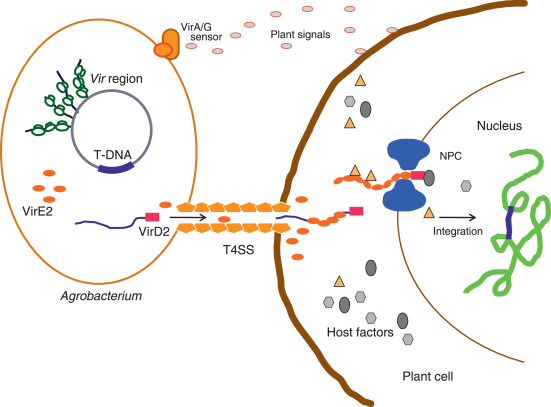
Agrobacterium transformation diagram

Exploring Biological Processes Through Interactive Development

Transforming complex genetic engineering workflows into intuitive web interactions, making learning vivid and engaging. The Agrobacterium transformation web app demonstrates how to build biology teaching tools with code.

Launch Simulation
Back to projects